The Right Way to File a Riverside County Divorce | Los Angeles Divorce


The Right Way to File a Riverside County Divorce

Filing for divorce can be a daunting and confusing process, especially when you’re navigating the legal system on your own. If you’re considering filing for divorce in Riverside County, California, it’s crucial to understand the specific procedures and requirements that apply to this jurisdiction. Getting it right the first time can save you time, money, and unnecessary headaches. In this comprehensive guide, I will walk you through the essential steps and insider tips to properly file your Riverside County divorce case, based on firsthand experience and legal know-how.

Understanding the Basics of Filing Divorce in Riverside County

When you decide to file for divorce, the first step is submitting your initial petition to the court. Riverside County offers the convenience of electronic filing (e-filing) for this initial document, which can streamline the process considerably. However, it’s important to note that while the initial petition can be e-filed, most other documents related to your case will require what’s called a “wet signature.” This means you must physically sign these documents by hand, have them notarized with a live (wet) notary, and then mail them into the court.

This hybrid system—part digital, part traditional—can be confusing if you’re not familiar with it. Many people mistakenly assume that everything can be handled online, but Riverside County maintains these specific requirements to ensure document authenticity and proper legal procedure. Knowing this upfront will help you avoid delays caused by improper submissions.

What is a Wet Signature and Wet Notary?

A wet signature refers to signing a document manually using a pen, rather than typing your name electronically or using a digital signature. This is often a legal requirement for certain court documents to verify the signer’s identity and consent.

A wet notary is a notary public who physically witnesses your signature in person. The notary then stamps and signs the document, certifying that they have confirmed your identity and watched you sign. This is distinct from electronic or online notarizations, which are not accepted for many court filings in Riverside County.

Understanding the difference and preparing for these requirements early on can save you from having to resend documents or face court rejections.

Filing Your Divorce Petition: Step-by-Step Guide

Here’s a detailed breakdown of the filing process to help you get started:

  1. Prepare Your Initial Petition: This is the main document that starts your divorce case. It outlines your request to legally dissolve your marriage and may include other requests like child custody or property division.
  2. E-File the Petition: Riverside County allows you to submit this initial petition electronically, which is fast and convenient. Make sure to follow the court’s specific e-filing guidelines to avoid rejection.
  3. Gather Additional Required Documents: Most other documents, such as financial disclosures, declarations, and responses, require wet signatures and notarization.
  4. Sign and Notarize Documents: Arrange to sign your documents in the presence of a licensed notary public who will notarize them.
  5. Mail Documents to the Court: After notarization, physically mail the documents to the appropriate Riverside County court location.

Important Reminder: The Declaration of Residence in San Bernardino

If you happen to be filing your divorce in San Bernardino County instead of Riverside, don’t overlook the Declaration of Residence form. Many people forget this critical document, which verifies that you meet residency requirements for filing in that county.

San Bernardino County has four different court locations, and you need to make sure you file in the correct one based on your residence. Filing in the wrong court can cause delays or even dismissal of your case. Always double-check the local rules and court divisions before submitting your paperwork.

Choosing the Right Court in Riverside County

Riverside County is divided into several courthouses, each serving specific regions and types of cases. When filing your divorce petition, you must submit to the correct courthouse based on where you or your spouse resides. Filing in the wrong court can result in your case being rejected or delayed, so it’s essential to verify the appropriate venue.

To find the right court, you can:

  • Check the Riverside County Superior Court website for courthouse locations and jurisdiction maps.
  • Contact the court clerk’s office for guidance.
  • Consult with a family law attorney if you’re unsure.

Getting this right ensures your case proceeds smoothly without unnecessary procedural challenges.

Common Pitfalls to Avoid When Filing for Divorce

Based on experience, here are some common mistakes that can trip you up during the filing process:

  • Assuming All Documents Can Be E-Filed: Remember, only the initial petition can be e-filed in Riverside County. Other documents must be wet signed and mailed.
  • Skipping the Wet Notarization: Electronic notarizations are generally not accepted. Make sure to get documents notarized in person.
  • Forgetting the Declaration of Residence (San Bernardino): This form is mandatory in San Bernardino County and often overlooked.
  • Filing in the Wrong Court Location: Double-check your venue to avoid delays or rejection.
  • Not Following Court Formatting Requirements: Courts have strict rules on document formatting, so be sure to follow instructions carefully.

Additional Tips for a Smooth Divorce Filing

Filing for divorce can be emotionally and logistically challenging. Here are some tips to make the process more manageable:

  • Organize Your Paperwork: Keep all your documents, receipts, and court communications in one place for easy reference.
  • Use Court Resources: Riverside County courts often provide self-help centers, guides, and workshops to assist self-represented parties.
  • Seek Legal Advice When Needed: Even if you plan to handle the case yourself, a brief consultation with a family law attorney can clarify complex issues.
  • Be Patient: Court processes can take time. Stay on top of deadlines and follow up as necessary.

Why Proper Filing Matters

Filing your divorce case correctly is not just a bureaucratic hoop to jump through—it’s the foundation for how your entire case will proceed. Errors in filing can cause significant delays, additional costs, and frustration. By understanding the nuances of Riverside County’s filing requirements, including the need for wet signatures and notarization, you’re setting yourself up for a smoother, more efficient process.

Remember, the divorce process is about more than just paperwork; it’s about making sure your legal rights and responsibilities are clearly defined and protected. Taking care of the filing details properly reflects your commitment to handling this difficult life transition responsibly.

Conclusion

Filing for divorce in Riverside County requires careful attention to detail and a clear understanding of the court’s filing procedures. While the initial petition can be conveniently e-filed, don’t forget that most other documents must be wet signed, notarized in person, and mailed to the court. If you’re filing in San Bernardino County, be sure not to overlook the Declaration of Residence and ensure you file in the correct courthouse among the four available.

By following these guidelines, you can avoid common pitfalls and move forward with your divorce case confidently. Remember that preparation and knowledge are your best tools when navigating the divorce process.

If you want to stay informed about legal tips and divorce advice, keep learning and reaching out to trusted resources. Taking the right steps today can make a significant difference in your journey toward a new chapter in life.

Should You Do Your Own California Divorce? Insights from Tim Blankenship Divorce661 | Los Angeles Divorce


Should You Do Your Own California Divorce? Insights from Tim Blankenship Divorce661

Divorce is never easy. It’s a life-altering event filled with emotional, legal, and financial challenges. If you’re considering ending your marriage in California, one question you might be asking is: Should I handle my divorce on my own? This question is common, and the answer isn’t always straightforward. In this article, we’ll explore the pros and cons of doing your own California divorce, drawing from the experience and expertise of Tim Blankenship of Divorce661, a trusted voice in divorce guidance.

Understanding the California Divorce Process

Before deciding whether to do your own divorce, it’s important to have a clear understanding of the California divorce process. California is a “no-fault” divorce state, which means you don’t have to prove wrongdoing by your spouse to get a divorce. The primary grounds for divorce is “irreconcilable differences.” While this simplifies the grounds for divorce, the process still involves several legal steps, paperwork, and court appearances.

The divorce process generally includes:

  • Filing a Petition for Dissolution of Marriage
  • Serving the divorce papers to the other spouse
  • Filing financial disclosures
  • Negotiating child custody and support if applicable
  • Dividing property and debts
  • Finalizing the divorce judgment

Each of these steps requires careful attention to detail and compliance with California family law statutes. Missing a step or filing incorrect paperwork can delay the process or negatively impact your rights.

Why Consider Doing Your Own Divorce?

One of the biggest reasons people consider handling their divorce themselves is cost. Divorce attorneys can be expensive, and for many, the legal fees add up quickly. If your divorce is relatively simple, with no children, minimal assets, and both parties in agreement, a DIY divorce might seem like an attractive option.

Additionally, some people prefer to take control of the process, wanting to avoid the stress of legal battles or the feeling of losing autonomy in their own case. Doing your own divorce can give you a sense of empowerment and direct involvement.

Tim Blankenship of Divorce661 often reminds people that while the idea of “I need your love, I need your time, and everything’s wrong” might resonate emotionally, the legal side requires clear-headedness and precision. Divorce is not just about emotions; it’s about making sure your future is protected.

The Challenges of a DIY California Divorce

While the DIY divorce approach might seem appealing, it’s important to understand the potential pitfalls:

1. Complexity of Legal Requirements

California divorce law can be complex. Even “simple” divorces require specific forms, disclosures, and court procedures. Missing a deadline or filing the wrong document can cause delays or even dismissal of your case.

2. Division of Property and Debts

California is a community property state, which means assets and debts acquired during the marriage are generally split equally. Properly identifying, valuing, and dividing property can be complicated, especially if you have significant assets or debts. Without legal guidance, you might unknowingly give up rights or fail to protect your interests.

3. Child Custody and Support Issues

If children are involved, the stakes are even higher. Child custody and support arrangements must be legally sound and in the best interest of the children. Missteps here can affect your parental rights and your children’s well-being.

4. Emotional Stress

Divorce is emotionally taxing. Trying to navigate the legal system while managing your feelings can be overwhelming. Sometimes, the emotional burden can lead to mistakes or rushed decisions that aren’t in your best interest.

5. Enforceability and Future Issues

Improperly drafted divorce agreements can lead to enforcement problems down the line. If the terms aren’t clear or legally binding, you may face difficulties enforcing custody, support, or property arrangements in the future.

When Is a DIY Divorce Appropriate?

Not every divorce is complicated. There are situations where doing your own divorce in California might be feasible and even beneficial:

  • Mutual Agreement: Both spouses agree on all major issues, including property division, child custody, and support.
  • No Children or Minimal Assets: The couple has no minor children or complex financial situations.
  • Willingness to Learn: You are comfortable researching and completing all necessary paperwork accurately.
  • Low Conflict: The divorce is amicable, and both parties communicate effectively.

In these cases, a DIY divorce can save money and time. However, even then, consulting with a family law professional for guidance or document review can be a wise investment.

Tips for Successfully Handling Your Own Divorce

If you decide to proceed with a DIY divorce, here are some tips to help you navigate the process effectively:

1. Educate Yourself Thoroughly

Spend time learning about California divorce laws, forms, and procedures. The California Courts website is a helpful resource, offering self-help guides and downloadable forms.

2. Stay Organized

Keep meticulous records of all documents, communications, and deadlines. Missing a deadline can cause significant setbacks.

3. Be Honest and Complete

Accurate financial disclosures are critical. Hiding assets or income can lead to legal consequences and unfair outcomes.

4. Use Mediation if Needed

If disagreements arise, consider mediation. It’s a cost-effective way to resolve disputes without going to trial.

5. Seek Professional Review

Even if you file the paperwork yourself, having an experienced family law attorney review your documents can prevent costly mistakes.

When to Hire a Divorce Attorney

While DIY divorces can work in certain situations, there are many cases where hiring a divorce attorney is the best choice. You should strongly consider legal representation if:

  • You have complex assets, businesses, or debts to divide.
  • There are child custody or support issues.
  • The divorce is contested or there is high conflict.
  • You suspect domestic violence or abuse.
  • You want to ensure your rights are fully protected.

An experienced attorney can guide you through the legal maze, negotiate on your behalf, and provide peace of mind during a difficult time.

Final Thoughts: Making the Right Choice for Your Divorce

Divorce is deeply personal and unique to each individual’s circumstances. The decision to do your own California divorce or hire an attorney depends on the complexity of your situation, your comfort level with legal procedures, and the potential consequences of mistakes.

As Tim Blankenship of Divorce661 reminds us, while emotions can run high—“I need your love, I need your time, and everything’s wrong”—it’s crucial to approach the divorce process with clarity and careful planning. Doing your own divorce might save money and give you control, but it also carries risks that could impact your future.

Ultimately, the best approach is to weigh your situation honestly, understand the legal requirements, and seek professional advice if needed. Whether you decide to go it alone or hire an attorney, your goal should be to secure a fair, legally sound, and peaceful resolution that allows you to move forward with confidence.

For those considering a California divorce, exploring all your options and understanding the process is the first step toward a new beginning.

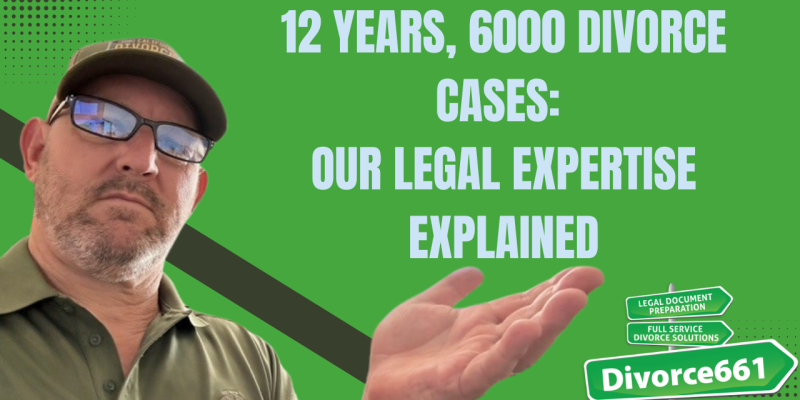
12 Years, 6000 Divorce Cases: Our Legal Expertise Explained | Los Angeles Divorce


12 Years, 6000 Divorce Cases: Our Legal Expertise Explained

Navigating through a divorce can be one of the most challenging experiences in a person’s life. It involves legal complexities, emotional upheaval, and a host of decisions that can impact your future. If you and your spouse are seeking an amicable divorce in California, finding the right legal partner can make all the difference. With over 12 years of experience and more than 6,000 amicable divorce cases successfully handled, our expertise at Divorce661 is tailored to making this process as smooth and stress-free as possible.

In this article, I’ll share insights from our extensive experience working across various counties in California, including Ventura, San Diego, Riverside, and Alameda counties. Whether you’re just beginning to consider divorce or are already in the process, understanding what to expect and how to approach your case amicably can greatly reduce the stress and complexity involved.

Why Choose an Amicable Divorce?

Divorce doesn’t have to be a bitter, drawn-out battle. An amicable divorce focuses on cooperation and mutual respect between spouses, often leading to faster resolutions and less emotional distress. At Divorce661, we specialize exclusively in amicable divorces because we believe that even in separation, respect and understanding should prevail.

Choosing an amicable divorce means:

  • Lower Costs: Fewer court appearances and less legal wrangling typically mean reduced legal fees.
  • Faster Resolution: Amicable divorces often conclude more quickly, allowing both parties to move forward sooner.
  • Better Communication: When both spouses cooperate, they can work through issues like property division, child custody, and support arrangements more effectively.
  • Less Emotional Strain: Avoiding contentious disputes helps preserve mental well-being during a difficult time.

Having handled over 6,000 amicable divorce cases, we have witnessed firsthand how this approach benefits families in California. It’s not simply about ending a marriage; it’s about starting a new chapter with dignity and clarity.

Our Experience Across California Counties

One of the strengths of our practice is the wide range of counties where we’ve successfully handled cases. On any given day, we often receive approvals from multiple courts, reflecting our deep understanding of local family law nuances.

Recently, for example, we had five approvals in one day from courts in Ventura County, San Diego County, Riverside County, and two from Alameda County. This diverse experience means we are well-versed in the varying procedures and requirements that different courts may have, helping to expedite your case regardless of where you live in California.

Ventura County

Ventura County courts often emphasize mediation and cooperative resolution approaches, which aligns perfectly with our amicable divorce philosophy. We work closely with mediators and court staff to ensure all paperwork and agreements meet local standards.

San Diego County

San Diego courts tend to have busy dockets, so efficiency is key. Our experience here has taught us how to prepare thorough documentation and anticipate court needs to avoid delays.

Riverside County

In Riverside County, we navigate unique community property rules and child custody considerations. Our team’s familiarity with these local specifics ensures no detail is overlooked.

Alameda County

Alameda County courts often encourage collaborative family law practices. We embrace this by fostering open communication between spouses and their attorneys, streamlining the settlement process.

What Sets Our Approach Apart?

With over a decade of experience and thousands of cases handled, you might wonder what makes Divorce661 different from other law firms. Here are some key aspects that define our approach:

  1. Exclusive Focus on Amicable Divorces: Unlike many firms that handle all divorce types, we specialize solely in amicable cases. This focus allows us to hone our skills and strategies specifically for cooperative separations.
  2. Personalized Attention: Even with a high volume of cases, we prioritize giving each client dedicated support and clear communication throughout the process.
  3. Efficient Case Management: Our streamlined systems help us manage large caseloads without sacrificing quality, ensuring your case moves smoothly through the courts.
  4. Knowledge of Local Courts: As mentioned, our experience spans several California counties, giving us an edge in understanding local rules and expectations.
  5. Transparent Process: We keep you informed every step of the way, demystifying legal jargon and court procedures so you feel confident and empowered.

Steps to an Amicable Divorce With Us

If you’re considering an amicable divorce in California, here’s a general overview of how we guide you through the process:

1. Initial Consultation

We begin with a detailed discussion to understand your unique situation, goals, and concerns. This helps us tailor the process to your needs and explain what to expect.

2. Agreement Preparation

Next, we assist you and your spouse in drafting a marital settlement agreement. This document covers all critical issues including property division, child custody and visitation, spousal support, and any other relevant matters.

3. Filing the Petition

Once the agreement is finalized, we file the necessary paperwork with the appropriate county court. Our familiarity with multiple counties ensures the filings are accurate and complete.

4. Court Review and Approval

The court reviews your agreement to ensure it is fair and compliant with California law. Given our track record, we often receive approvals quickly, as evidenced by the multiple approvals we receive daily from various courts.

5. Finalizing the Divorce

Once approved, the court issues a divorce decree, officially ending the marriage. We guide you through this final step to ensure all legal requirements are met.

Common Questions About Amicable Divorce in California

Is an amicable divorce always possible?

While not every couple can achieve an amicable divorce, many can, especially if both parties are willing to cooperate and communicate openly. Our goal is to facilitate this cooperation and provide the legal framework to support it.

How long does an amicable divorce take?

The timeline varies depending on the complexity of the case and court schedules, but amicable divorces typically conclude faster than contentious ones. On average, you might expect the process to take a few months, sometimes less when all paperwork is in order.

What if we disagree on some issues?

Even in amicable divorces, disagreements can arise. We encourage mediation or collaborative law approaches to resolve these differences without resorting to litigation.

Do we need lawyers for an amicable divorce?

While it’s possible to file without legal representation, having experienced counsel ensures your rights are protected and paperwork is handled correctly. Our expertise in amicable divorces makes this process straightforward and less intimidating.

Why Experience Matters in Divorce Cases

Handling over 6,000 divorce cases in 12 years has given us invaluable insights into what works and what doesn’t. Experience matters because:

  • Anticipating Challenges: We know common stumbling blocks and how to avoid them.
  • Efficient Problem-Solving: Experienced attorneys can quickly find solutions that protect your interests.
  • Confidence and Peace of Mind: Knowing your case is in capable hands reduces stress and uncertainty.

Our consistent success in obtaining court approvals across multiple counties is a testament to our thorough preparation and deep understanding of California family law.

Final Thoughts: Your Partner for a Smooth Divorce Journey

Divorce can be difficult, but it doesn’t have to be adversarial or overwhelming. With the right legal support, you can navigate this transition with clarity and respect. At Divorce661, we are proud to offer over 12 years of specialized experience in amicable divorces, helping thousands of Californians move forward positively.

If you and your spouse are ready to pursue an amicable divorce, or if you simply want to explore your options, don’t hesitate to reach out. Our team is here to provide expert guidance every step of the way, ensuring your case is handled efficiently and compassionately.

Remember: Divorce is not just an ending—it’s the start of a new chapter. Let us help you begin that chapter with confidence.

Should You Use An Online Divorce Service? Los Angeles Divorce Insights | Los Angeles Divorce


Should You Use An Online Divorce Service? Los Angeles Divorce Insights

Divorce is never an easy decision, and navigating the process can be overwhelming. With the rise of technology and online legal services, many people wonder if using an online divorce service is a viable solution, especially in a complex legal environment like Los Angeles. As someone who has worked extensively in family law, I want to share my insights and help you understand whether an online divorce service is the right choice for you.

Understanding Online Divorce Services

Online divorce services have become increasingly popular in recent years. These platforms typically offer a way to file for divorce without the need for in-person consultations or hiring a traditional attorney. They promise convenience, affordability, and a streamlined process for couples with straightforward cases.

At first glance, this sounds like a great option—especially if you want to save money or avoid the emotional stress of face-to-face meetings. However, it’s important to understand what these services entail, their limitations, and when they might not be the best route to take.

When Online Divorce Services Might Work

Online divorce services can be a good fit in certain situations. Here are some scenarios where they might be appropriate:

  • Uncontested Divorces: If both parties agree on all major issues like property division, child custody, and support, an online service can help you file the necessary paperwork quickly and efficiently.
  • Simple Financial Situations: When there are no complicated assets such as businesses, multiple properties, or retirement accounts involved, the process is often straightforward enough for an online solution.
  • Cost-Conscious Individuals: Traditional divorce attorneys can be expensive, and online services offer a more budget-friendly alternative for those who don’t require extensive legal advice.
  • Time-Saving: For people who want to avoid lengthy court battles or drawn-out negotiations, online services can speed up the initial filing process.

In these circumstances, using an online divorce service may be efficient and sufficient, allowing you to move on with your life faster and with less stress.

The Limitations of Online Divorce Services

Despite the appeal of convenience and cost savings, online divorce services come with significant limitations that you need to carefully consider:

  • Lack of Personalized Legal Advice: Divorce laws can be complex, especially in California. Online services provide standardized forms but don’t offer tailored advice to fit your unique situation.
  • Complicated Custody and Support Issues: Child custody and support arrangements often require nuanced negotiations and court intervention. Online platforms rarely provide the necessary support for these sensitive matters.
  • Hidden Costs: While the upfront fees may be lower, you might incur additional costs if your case becomes complicated or if you need to hire an attorney later to resolve disputes.
  • Risk of Mistakes: Filling out legal paperwork without professional guidance can lead to errors that delay your case or negatively impact your rights.
  • Limited Court Representation: Online divorce services typically don’t provide representation in court hearings, which could be critical if your case isn’t uncontested.

These limitations mean that online divorce services are not a one-size-fits-all solution, and choosing them without understanding your case’s complexity can result in unintended consequences.

Why Los Angeles Divorce Cases Often Require More Attention

Los Angeles is a diverse and populous city with a complex legal system. Divorce cases here often involve intricate financial portfolios, child custody challenges, and high emotional stakes. Here’s why you might want to think twice before relying solely on an online divorce service in Los Angeles:

  • Community Property Laws: California is a community property state, meaning that assets and debts acquired during the marriage are typically divided equally. Understanding how to properly value and divide these assets requires expert legal knowledge.
  • High Property Values: Real estate in Los Angeles is expensive and often a major asset in a divorce. Handling the division of property, mortgages, and potential tax implications goes beyond simple form-filling.
  • Child Custody Complexity: Courts in Los Angeles prioritize the best interests of the child, which involves detailed evaluations and sometimes mediation or litigation. Online services do not provide the tools or support needed for these processes.
  • Potential for Contested Divorces: Given the financial and emotional complexities, many divorces in Los Angeles become contested, requiring negotiation or litigation that online services cannot handle.

In these scenarios, having a skilled family law attorney who understands Los Angeles courts, judges, and local laws can make a significant difference in protecting your interests.

What to Consider Before Choosing an Online Divorce Service

If you’re thinking about using an online divorce service, ask yourself the following questions to determine if it’s the right fit:

  1. Are you and your spouse in agreement on all major issues? If not, an online service may not be sufficient.
  2. Do you have complex assets or debts that need to be divided? If yes, professional legal advice is crucial.
  3. Is child custody or support part of your divorce? If so, you’ll likely need more personalized support than an online platform can offer.
  4. Are you comfortable filling out legal forms on your own without guidance? Mistakes can be costly and delay your case.
  5. Do you understand California’s divorce laws and court procedures? If not, professional help can prevent costly errors.

Answering these questions honestly will help you decide whether an online divorce service is a practical option or if you need the expertise of a qualified attorney.

The Value of Professional Legal Support

While online divorce services may seem like a quick fix, the value of professional legal support cannot be overstated, especially in a city like Los Angeles. Here’s what a family law attorney brings to the table:

  • Personalized Strategy: Every divorce is unique. An attorney provides tailored advice that fits your specific circumstances and goals.
  • Negotiation Expertise: Skilled attorneys can negotiate on your behalf to reach fair settlements that protect your rights.
  • Court Representation: If your case goes to court, having an experienced attorney represent you can significantly affect the outcome.
  • Emotional Support: Divorce is emotionally taxing. A compassionate attorney can guide you through difficult decisions and reduce your stress.
  • Protecting Your Interests: Attorneys understand the nuances of law and how to safeguard your financial and parental rights.

Hiring an attorney may require a larger upfront investment, but it often saves money and heartache in the long run by preventing mistakes and ensuring a smoother process.

Final Thoughts: Making the Right Choice for Your Divorce

Divorce is a major life event that deserves careful consideration and planning. While online divorce services offer an appealing promise of speed and savings, they are best suited for simple, uncontested cases with no complex financial or custody issues.

In Los Angeles, where divorces often involve complicated assets and sensitive child custody matters, professional legal advice is invaluable. Before deciding on an online service, take the time to evaluate your situation honestly and consider consulting with a family law expert who can help you navigate this challenging process.

Remember, the goal is not just to end your marriage but to start the next chapter of your life on the strongest possible footing. Choosing the right divorce process is the first step toward that goal.

If you’re facing divorce in Los Angeles and want to explore your options, don’t hesitate to seek professional guidance. Taking that step can make all the difference in achieving a fair and respectful resolution.

Debunking the Myth: Mothers Always Get Custody | Los Angeles Divorce


Debunking the Myth: Mothers Always Get Custody

In the realm of family law and divorce proceedings, one of the most persistent myths is that mothers always get custody of the children. This misconception can cause unnecessary frustration and confusion for many fathers and parents navigating custody arrangements. The truth, however, is far more nuanced and depends heavily on the agreements made between parents and the specifics of each case. Drawing from insights shared by Tim Blankenship from Divorce661, this article aims to shed light on the realities of child custody and debunk the myth once and for all.

Understanding the Custody Landscape

When discussing custody, it’s important to clarify that the term can refer to different aspects: legal custody and physical custody. Legal custody involves the right to make important decisions about the child’s welfare, education, and health, while physical custody refers to where the child actually lives and who takes care of them day-to-day.

A common misconception is that mothers automatically receive custody, especially physical custody, after a divorce or separation. However, the reality is that custody arrangements are often the result of mutual agreements between parents or, when necessary, decisions made by the court based on the best interests of the child.

The Role of Agreements in Custody Decisions

One of the key points emphasized is that in many cases, parents have the power to “call the shots” and decide custody terms themselves. Most custody agreements are joint legal and physical custody arrangements, though the division of time spent with each parent may not always be exactly 50/50. For example, one parent may have a larger share of the physical custody time simply because the children sleep at their home more often, but this does not mean the other parent is excluded or has no rights.

It’s important to note that joint custody does not necessitate an equal split of time. Joint custody means both parents share responsibility for the child’s upbringing, but the physical time spent can vary widely. Factors such as work schedules, the child’s school location, and the parents’ living arrangements all influence the time-sharing percentages.

Dispelling the Custody Myths: Procedural Realities

Some fathers express frustration and feel they are unfairly denied custody, contributing to the myth that courts favor mothers. While there are cases where judges’ decisions may appear to lean one way, this is not a universal rule. Custody decisions are made on a case-by-case basis, considering the best interests and welfare of the child.

From a procedural standpoint, the courts often encourage parents to reach agreements outside of court to minimize conflict and ensure a stable environment for the child. When parents cannot agree, the court steps in, but even then, the decision is based on evidence, parental capabilities, and the child’s needs — not simply the gender of the parent.

Furthermore, the idea that mothers “always get custody” overlooks the diversity of custody arrangements seen today. Many fathers have joint physical custody or even primary custody in certain situations. The legal system is designed to support the child’s best interest, which can mean different custody outcomes depending on the family dynamics.

Why Time Share Percentages Matter

While the exact time each parent spends with the child may not always be equal, the percentages become particularly significant when calculating child support. Child support obligations are often tied to the amount of time a parent spends with the child, as well as the parents’ incomes. For example, if one parent has the child for 80% of the time, this will affect the financial responsibilities each parent has towards the child.

However, it’s crucial to understand that having a higher time share does not automatically equate to sole custody or complete control over decisions. Joint legal custody means both parents retain rights to make important decisions regarding the child’s upbringing, regardless of how physical custody is divided.

Common Misconceptions and Real-World Examples

Many discussions in forums and online chats reveal the emotional weight of this myth. Fathers often feel marginalized or unheard when it comes to custody matters, which can lead to a belief that the system is biased. While these feelings are valid and should be acknowledged, they do not always reflect the legal realities.

For instance, in some cases, mothers may have a larger time share simply because they are currently the primary caregiver or not working outside the home, making it more practical for the children to stay with them more often. This arrangement is not about favoritism but about the practical logistics of daily life and the best interests of the children.

It’s also important to recognize that custody arrangements can and do change over time. As circumstances evolve—such as changes in work schedules, relocation, or the child’s needs—parents can revisit and modify custody agreements to better suit the family’s current situation.

Legal Advice vs. Procedural Guidance

One point often misunderstood is the difference between providing legal advice and offering procedural guidance. While some might accuse those discussing custody issues of giving bad legal advice, it’s important to clarify that sharing procedural knowledge or explaining how custody arrangements commonly work is not the same as offering legal counsel.

Understanding the procedural side—such as how custody is typically arranged, what joint legal and physical custody mean, and how time shares impact child support—empowers parents to make informed decisions and negotiate better agreements. However, for personalized legal advice tailored to specific circumstances, consulting a qualified family law attorney is always recommended.

Moving Forward: What Parents Should Know About Custody

If you are a parent facing custody decisions, here are some important takeaways to keep in mind:

  • Custody is not automatically awarded to mothers. Courts focus on the best interests of the child and encourage parents to reach mutual agreements.
  • Joint legal and physical custody are common. This means both parents share decision-making responsibilities and physical care, though time shares may vary.
  • Time shares matter for child support calculations. The percentage of time each parent spends with the child influences financial responsibilities.
  • Custody arrangements can be flexible. They can be adjusted over time to better suit changing family dynamics and the child’s needs.
  • Seek professional legal advice when needed. While procedural knowledge is helpful, personalized legal counsel is important for navigating complex cases.

Conclusion: Challenging Assumptions for Better Outcomes

The myth that mothers always get custody of children is not only misleading but can also create unnecessary conflict and disappointment for parents. Custody arrangements are far more complex and individualized than this stereotype suggests. By understanding the procedural realities, recognizing the importance of mutual agreements, and focusing on the best interests of the child, parents can work towards custody solutions that are fair and supportive.

Remember, custody is about the child’s well-being, not about gender preferences. Both mothers and fathers have the potential to play vital roles in their children’s lives. With clear communication, cooperation, and informed decision-making, parents can create custody arrangements that truly serve their family’s needs.

For more myth-busting insights and guidance on divorce and custody matters, exploring resources from experienced professionals like Tim Blankenship at Divorce661 can be invaluable.

What to Do If Your Ex-Spouse Fails to Follow the Divorce Agreement? | Los Angeles Divorce


What to Do If Your Ex-Spouse Fails to Follow the Divorce Agreement? | Los Angeles Divorce

Finalizing a divorce often feels like crossing the finish line after a long race. However, for many, the real challenges begin once the divorce decree is signed and sealed. If your ex-spouse fails to comply with the terms outlined in your divorce agreement, whether it’s unpaid support, missed custody exchanges, or refusal to divide property, it can create frustration and uncertainty. Fortunately, there are legal remedies available to help you enforce your rights and hold your ex accountable.

In this article, I’ll guide you through the steps you should take if your ex-spouse isn’t following your divorce agreement. Drawing from my experience at Divorce661, I’ll explain how to review your judgment, file enforcement motions, and document ongoing violations. If you’re dealing with post-divorce non-compliance, this comprehensive guide will empower you to protect what’s rightfully yours.

Understanding Your Divorce Agreement and Judgment

The first crucial step when faced with non-compliance is to thoroughly review your divorce judgment or settlement agreement. The court can only enforce what has been explicitly ordered in writing. This means clarity is key.

Take the time to carefully examine your judgment document and identify the specific provisions related to the issue you’re experiencing. Is the problem about child custody, support payments, property division, or something else? Make sure the language in the agreement clearly addresses this issue without ambiguity.

If the terms are vague or open to interpretation, enforcement can become complicated. Courts rely on clear, unambiguous orders to take action. This is why well-drafted divorce agreements are so important—they provide a solid foundation for enforcement if needed later.

Why Clarity Matters

When a court order is clear and specific, it removes doubt about what is expected from each party. For example, if the judgment states that the ex-spouse must transfer the title of a vehicle within a certain timeframe, the court can enforce that obligation directly. Without such clarity, it may be difficult to prove a violation or compel compliance.

Therefore, reviewing your judgment thoroughly is your first and most important step. Knowing exactly what the court has ordered enables you to determine the best course of action.

Filing a Request for Order (RFO) to Enforce Your Divorce Agreement

If your ex-spouse is not complying with the terms of your divorce judgment, the next step is to file a Request for Order (RFO) with the court. This legal motion asks the judge to enforce the agreement and resolve the dispute.

An RFO can address a variety of issues, including:

  • Missed or late child support payments
  • Failure to follow custody or visitation schedules
  • Refusal to divide or transfer property as ordered
  • Non-payment of spousal support or other financial obligations

When you file an RFO, the court schedules a hearing where both parties can present their side. The judge then decides what remedies or sanctions are appropriate to enforce compliance.

Possible Court Orders and Sanctions

Depending on the nature and severity of the violation, the court may issue orders such as:

  • Requiring payment of past-due support or makeup custody time
  • Ordering specific performance, such as transferring a vehicle title
  • Imposing fines or other penalties for contempt of court
  • Adjusting custody or support arrangements if warranted

Filing an RFO is a powerful tool to get the court involved and compel your ex-spouse to follow through on their obligations. It also sends a clear message that violations won’t be ignored.

A Real Client Story: Enforcing a Vehicle Title Transfer

Let me share a real example from my work at Divorce661 to illustrate how enforcement works in practice.

We had a client whose ex refused to transfer the title on a vehicle, even though the judgment clearly required it. This refusal was creating ongoing problems and frustration.

We helped our client file an enforcement motion with the court, detailing the violation and requesting an order to compel the title transfer. The judge reviewed the motion and issued an order requiring the ex-spouse to complete the transfer within 10 days. The order also warned that failure to comply would result in financial penalties.

This case highlights how effective court enforcement can be when the judgment is clear and the motion is properly prepared. With the court’s backing, our client was able to obtain what was rightfully theirs without prolonged conflict.

Documenting Ongoing Violations: Why Records Matter

If the problem you’re facing is ongoing—such as repeated missed support payments—it’s essential to keep a detailed record. This documentation will strengthen your case if you need to return to court.

Here’s what to track:

  • Dates of missed or late payments
  • Amounts owed and unpaid
  • Communication attempts you made to resolve the issues
  • Any responses or excuses given by your ex-spouse

Keeping this information organized shows the court a clear pattern of non-compliance rather than an isolated incident. It also helps your attorney build a strong enforcement motion backed by solid evidence.

How Divorce661 Can Help You Enforce Your Divorce Agreement

At Divorce661, we understand that dealing with non-compliance after divorce can be stressful and overwhelming. That’s why we offer flat-fee services to guide you through the enforcement process smoothly and efficiently.

Our approach includes:

  • Reviewing your divorce judgment and identifying enforceable provisions
  • Preparing and filing the appropriate court forms, including Requests for Order
  • Serving the court papers on your ex-spouse
  • Providing strategic guidance to present your case effectively in court
  • Helping you gather and organize documentation to support your motion

We handle the complex legal procedures remotely, so you don’t have to worry about navigating court forms or appearances alone. Our goal is to protect your rights and get you the results you deserve.

Don’t Wait: Take Action to Protect Your Rights

If your ex-spouse isn’t following your divorce agreement, the most important thing is not to ignore the problem or hope it will resolve itself. Delaying enforcement can make it harder to get relief and may allow violations to continue unchecked.

By acting promptly to review your judgment, document violations, and file enforcement motions, you increase your chances of a favorable outcome. The court has tools to hold your ex accountable and help you recover what you’re owed—whether that’s child support, property, or custody time.

Remember, you don’t have to face this challenge alone. Legal guidance and support are available to help you navigate the process and assert your rights effectively.

Get a Free Consultation to Explore Your Options

If you’re struggling with an ex-spouse who won’t follow your divorce agreement, I encourage you to visit Divorce661.com for a free consultation. We’ll listen to your situation, review your paperwork, and explain the best legal steps you can take to enforce your judgment.

Taking that first step can make a world of difference in resolving post-divorce disputes and restoring stability to your life.

Final Thoughts

Divorce doesn’t always end when the papers are signed. Post-divorce enforcement issues are common but manageable with the right approach. By understanding your divorce judgment, filing a Request for Order when necessary, and keeping detailed records, you can hold your ex-spouse accountable and protect your rights.

At Divorce661, we’re here to help you every step of the way. Whether you need assistance with enforcement or any other family law matter, our experienced team provides clear, affordable, and effective support. Don’t hesitate to reach out and get the help you deserve.

“If your ex-spouse isn’t following your divorce agreement, don’t wait. Visit divorce661.com for a free consultation. We’ll help you understand your options and take the right legal steps to enforce your rights and protect what’s yours.” — Tim Blankenship, Divorce661


What to Do If Your Ex-Spouse Fails to Follow the Divorce Agreement? | Los Angeles Divorce


What to Do If Your Ex-Spouse Fails to Follow the Divorce Agreement?

Finalizing a divorce is a significant milestone in anyone’s life. It marks the end of a chapter and the beginning of a new one. However, the journey doesn’t always end with the final court judgment. Many people face the frustrating reality that their ex-spouse does not comply with the terms outlined in the divorce agreement. Whether it’s unpaid support, missed custody exchanges, or refusal to divide property, non-compliance can create ongoing stress and confusion.

As someone who has worked extensively in divorce law, I understand how overwhelming it can be when your ex doesn’t follow through with the court’s orders. But here’s the good news: you are not powerless. There are clear legal options available to enforce compliance and protect your rights.

Understanding the Importance of Your Court Judgment

The first step in addressing non-compliance is to carefully review your court judgment. This document is the official ruling from the court that outlines the responsibilities and obligations of both parties following the divorce. It typically covers key areas such as:

  • Child custody and visitation schedules
  • Child and spousal support payments
  • Division of property and assets
  • Debt allocation

By understanding exactly what the court has ordered, you can identify which terms are enforceable. This clarity is essential because the law can only intervene if there is a violation of a court order. For example, if your ex is supposed to transfer the title of a vehicle to you, but refuses to do so, that is a clear breach of the judgment.

Legal Tools to Enforce Your Divorce Agreement

When your ex-spouse refuses to comply, the court provides mechanisms to compel them to follow the rules. One of the most effective tools is filing a Request for Order (RFO). This is a formal petition to the court asking for enforcement of specific terms of the judgment.

Filing a Request for Order can:

  • Compel your ex to follow the terms of the divorce agreement
  • Impose penalties or sanctions for non-compliance
  • Establish new orders if circumstances have changed

The process might sound intimidating, but it is a powerful way to ensure your rights are respected. For example, I recently helped a client whose ex refused to transfer the title of a car as ordered by the court. We filed a Request for Order, and the judge gave the ex 10 days to comply or face sanctions. The problem was resolved quickly without restarting the entire divorce case.

The Power of Documentation: Your Strongest Weapon

One of the most critical aspects of enforcing your judgment is keeping detailed records. Whenever your ex misses a payment, ignores custody arrangements, or refuses to cooperate, document it meticulously. This includes:

  • Dates and amounts of missed support payments
  • Instances of missed or late custody exchanges
  • Copies of communications (texts, emails, letters) related to the dispute
  • Any other evidence showing refusal to comply

Why is this so important? Courts rely heavily on evidence. Your detailed records can make the difference between a successful enforcement or a prolonged legal battle. A well-documented case strengthens your position and makes it easier for the court to take decisive action.

Tips for Effective Documentation

  1. Maintain a Log: Keep a dedicated notebook or digital document to record every incident of non-compliance.
  2. Save All Correspondence: Preserve emails, text messages, and letters that relate to your divorce terms.
  3. Gather Witness Statements: If others witness violations (for example, missed custody pick-ups), ask them to provide written statements.
  4. Secure Financial Records: Bank statements, canceled checks, and payment confirmations can prove missed support payments.

Why Professional Help Matters

While the law provides clear options, navigating the enforcement process can be complex. Properly filing requests, submitting evidence, and presenting your case require legal knowledge and experience. This is where professional assistance can be invaluable.

Legal experts can help you:

  • Understand your rights and options clearly
  • Prepare and file legal documents accurately
  • Develop a court strategy tailored to your case
  • Ensure all evidence is organized and compelling

Working with a knowledgeable legal team can streamline the enforcement process, saving you time, stress, and money. For those in California, services like Divorce661 offer flat-fee enforcement filings, eliminating hourly fees and providing step-by-step support from judgment to enforcement. Their 100% remote services mean you can get help no matter where you live in the state.

Taking Action: Protecting Your Rights and Future

Non-compliance with a divorce judgment is not something you have to accept silently. Taking decisive action protects what is rightfully yours and ensures justice is served. The court system is designed to uphold agreements and provide remedies when one party refuses to honor their obligations.

Here’s a quick recap of the steps you should take if your ex-spouse fails to follow the divorce agreement:

  1. Review Your Court Judgment: Understand the enforceable terms.
  2. Document Every Violation: Keep detailed records of missed payments, custody issues, or refusal to divide property.
  3. File a Request for Order: Ask the court to compel compliance or impose penalties.
  4. Seek Professional Legal Help: Get assistance with filing, documentation, and court strategy.
  5. Follow Through: Stay persistent and keep the court informed of ongoing non-compliance.

Real Client Success Story

Let me share a real example to illustrate how enforcement works in practice. A client came to us frustrated because their ex-spouse refused to transfer the title of a vehicle, despite the court order. We filed a Request for Order motion, and the court responded quickly. The ex was given 10 days to comply or face sanctions. Within that timeframe, the title was transferred, and the issue was resolved without prolonged conflict or additional hearings.

This case highlights how effective enforcement can be when combined with proper documentation and legal support. It’s a reminder that the court system is there to protect you—and that you have options to ensure your divorce agreement is honored.

Why You Shouldn’t Delay Enforcement

Delaying action when your ex-spouse violates the divorce judgment can lead to bigger problems down the line. Unpaid support can accumulate, missed custody exchanges can strain relationships with your children, and unresolved property disputes can affect your financial stability.

By acting promptly, you not only protect your current rights but also set a precedent that non-compliance will not be tolerated. This can encourage your ex to follow the agreement more closely in the future and reduce ongoing conflicts.

Next Steps: Get the Support You Need

If you’re dealing with an ex who won’t follow your divorce judgment, don’t hesitate to seek help. Visit Divorce661.com for a free consultation. Get expert guidance on how to document violations, file enforcement motions, and navigate the court process—all without restarting your entire case.

Remember, enforcing your judgment is about protecting your rights, your family, and your future. You don’t have to face this challenge alone.

Final Thoughts

Divorce is difficult enough without the added stress of an ex-spouse refusing to follow the court’s orders. But with the right knowledge and legal tools, you can take control of the situation. Review your judgment carefully, keep detailed records, and don’t hesitate to use the court’s enforcement mechanisms.

Professional support can make a significant difference in ensuring your case is handled effectively and efficiently. By taking action, you safeguard your rights and ensure that justice is served.

Your divorce agreement is a binding legal document designed to protect both parties. When it’s not honored, the law offers remedies to correct that. Protect what is rightfully yours. Take action today.

For expert guidance and a free consultation, visit Divorce661.com and let’s work together to ensure your divorce agreement is honored and your future is secure.


What to Consider When Moving to a New State After Divorce? | Los Angeles Divorce


What to Consider When Moving to a New State After Divorce?

Moving to a new state after a divorce can feel like a fresh start—a chance to rebuild your life, pursue new opportunities, or be closer to family. However, if you have children or ongoing support obligations, this transition requires careful planning and legal considerations to ensure everything goes smoothly. As someone who has helped many clients navigate these waters, I want to share the essential steps and insights you need to know before making that big move.

Understanding the Importance of Court Approval When Children Are Involved

One of the first things to understand is that moving out of state post-divorce isn’t simply a matter of packing up and leaving, especially if you share custody of children. Even if you have sole custody, the court often has a say in whether or not you can relocate with your kids. The main concern courts have is the best interest of the child, and any move that could disrupt the child’s stability or relationship with the other parent will be scrutinized closely.

In some cases, your divorce judgment or custody order will include specific provisions about relocation. These might require you to get permission from the court or at least notify your ex-spouse before moving. Ignoring these requirements can lead to serious legal complications, including modifications to custody or contempt of court charges.

For example, we recently helped a client who shared joint custody file a move-away request with the court. We worked on revising the parenting schedule and obtained court approval before the move took place. This proactive approach avoided any court battles or surprises, allowing the family to transition smoothly to their new home.

Review Your Divorce Judgment for Relocation Restrictions

Before you even start packing boxes, take a close look at your divorce judgment. This document often contains critical information about what you can and cannot do regarding moving. Some judgments explicitly state that you must notify the other parent within a set time frame of your intended move or obtain court approval if the move exceeds a certain distance.

Failing to adhere to these stipulations can result in legal action from your ex-spouse. They might challenge the move or seek to modify custody arrangements. To avoid unnecessary conflict, it’s essential to follow all court requirements strictly.

Keep in mind that these rules are designed to protect the children’s best interests and maintain their relationship with both parents whenever possible. Courts generally want to support moves that benefit the child but will intervene if the move appears to be an attempt to limit the other parent’s involvement.

The Legal Necessity of Notifying Your Ex About Your New Address

One of the most overlooked aspects of relocating post-divorce is the obligation to notify your ex-spouse of your new address. This is more than just courteous; it’s often a legal requirement. If your ex does not know where their children are living, it can cause mistrust, confusion, and even lead to accusations of parental alienation or custodial interference.

By keeping your ex informed, you help maintain open communication and reduce friction. This transparency also ensures that legal documents, visitation schedules, and support payments can continue without interruption.

Remember, moving without proper notification can have long-term consequences, including court sanctions or changes to custody and support orders. It’s always better to be upfront and legal rather than risk costly and stressful legal battles down the road.

How Moving Affects Child Support, Spousal Support, and Your Financial Situation

Moving to a new state can significantly impact your financial obligations and cost of living. Child support and spousal support orders are often based on local income standards, cost of living, and tax laws. When you relocate, these factors can change dramatically.

For instance, moving from a high-cost area like Los Angeles to a more affordable state might reduce your living expenses but could also affect how much support you pay or receive. Conversely, relocating to a more expensive area might increase your financial burden.

It’s wise to consult a financial expert or family law professional who understands the nuances of interstate support modifications. They can help you understand how your move will impact your support payments and overall budget. Proper financial planning ensures that your transition is smooth and that you avoid unexpected financial strain.

Updating Custody and Support Terms: Why It’s Crucial

After relocating, it’s important to update your custody and support orders to reflect your new circumstances. This includes revising parenting schedules to accommodate the increased distance and changing support amounts if necessary.

At Divorce661, we specialize in helping clients make these updates legally and efficiently. We provide flat-fee services for post-judgment modifications, including move-away requests, custody changes, and support updates. Our remote support means you can handle everything from the comfort of your new home without added stress.

By proactively updating your legal documents, you protect yourself from future disputes and ensure that both parents have a clear, court-approved plan moving forward. This approach benefits everyone involved—especially the children.

Take Proactive Steps to Avoid Legal Issues and Move with Confidence

Relocating after a divorce can be an exciting new chapter, but it also comes with legal responsibilities that must be handled carefully. Here are some key steps to take before your move:

  • Review your divorce judgment: Understand any relocation restrictions or notification requirements.
  • Notify your ex-spouse: Provide your new address and discuss how the move will affect custody and visitation.
  • Seek court approval if required: File any necessary petitions to modify custody or visitation schedules.
  • Consult financial experts: Understand how your move will impact child support, spousal support, and your overall budget.
  • Update legal documents: Ensure custody and support orders reflect your new situation.

Taking these proactive steps can save you from costly legal battles and emotional stress. It allows you to move forward with confidence, knowing that everything is in order and that your children’s best interests are protected.

How Divorce661 Can Help You With Your Move

If you’re planning to relocate after divorce, you don’t have to navigate the process alone. Divorce661 offers expert guidance and support to make your move legal and stress-free. Our services include:

  • Legal move-away requests
  • Custody modifications
  • Support order updates
  • Flat-fee, transparent pricing
  • 100% remote support from start to finish

We understand how important it is to get these details right the first time. That’s why we offer a free consultation to help you understand your options and chart the best course forward. With Divorce661, you can avoid costly mistakes and ensure your new beginning is as smooth as possible.

Final Thoughts

Moving to a new state after divorce is a major life decision that requires more than just logistical planning. When children and legal obligations are involved, it’s crucial to address the legal and financial aspects thoroughly. Court approval, custody modifications, notifying your ex, and understanding support changes are all key to a successful transition.

By approaching your move with care and the right professional support, you can protect your rights, honor your responsibilities, and create a stable environment for your children. Remember, the goal is to make your new chapter a positive step forward without unnecessary drama or legal complications.

If you’re considering a move, take the time to consult with experienced professionals who can guide you through the process. Your peace of mind and your children’s well-being are worth it.

For expert help on relocating after divorce, visit Divorce661.com and schedule your free consultation today.


Find the Perfect Divorce Attorney In California: 5 Essential Tips | California Divorce


Find the Perfect Divorce Attorney In California: 5 Essential Tips

Navigating a divorce can be one of the most challenging experiences in life. The decisions you make during this time, especially when it comes to choosing the right divorce attorney, can significantly impact the outcome of your case and your peace of mind. With over a decade of experience in family law and firsthand knowledge of the divorce process, I’ve seen how crucial it is to find an attorney who not only understands the law but also aligns with your goals and communication style.

Whether you’re just starting the process or are already deep into it, these five essential tips will help you find the perfect divorce attorney in California to guide you through every step of your journey.

1. Research and Interview Multiple Attorneys

One of the biggest mistakes people make is settling for the first attorney they come across. Divorce is complex and personal, so you want to take the time to research and interview several attorneys before making a decision. This approach ensures you find someone who understands your unique situation and whose style matches your needs.

Start by asking trusted friends, family members, or colleagues for referrals. Personal recommendations can be invaluable because they come from people who have firsthand experience with the attorney. Additionally, read online reviews to get a broader sense of an attorney’s reputation and track record.

When you meet with potential attorneys, trust your instincts. You might find that some attorneys just don’t feel like the right fit—maybe it’s how they communicate, their demeanor, or how they approach your case. Gut feeling matters, but always back it up with facts like their experience, reviews, and how responsive they are during your consultation.

2. Look for Experience in Family Law

Divorce law is a specialized area that requires a deep understanding of family law nuances. Not all attorneys who advertise divorce services are equally qualified. Some may primarily practice corporate, business, or even personal injury law and only take divorce cases on the side. While this might seem convenient, it’s essential to choose an attorney whose primary focus and expertise is family law.

Look for attorneys who specialize in family law or divorce cases specifically. This specialization means they are more familiar with the complexities of divorce proceedings, child custody battles, division of assets, and spousal support issues. They are also more likely to be up to date on California’s family law statutes and local court procedures.

Additionally, some attorneys hold certifications that highlight their advanced expertise in family law. For example, a Certified Family Law Specialist (CFS) designation indicates additional training and experience in this field. While not mandatory, such certifications can be a good indicator of an attorney’s commitment and competence in family law.

3. Consider Compatibility and Communication

The attorney-client relationship is foundational to a successful divorce process. You want an attorney with whom you feel comfortable sharing personal details and who listens carefully to your concerns. Effective communication is key; your attorney should be responsive and willing to explain legal concepts in a way you understand.

During your initial consultation, pay attention to how well the attorney listens. Do they seem genuinely interested in your goals? Are they open to answering your questions thoroughly? These are vital indicators of how communication will flow throughout your case.

It’s also important that your attorney accurately represents your wishes when communicating with the opposing party or their counsel. Miscommunication can lead to misunderstandings or even harm your case. For instance, if you want an amicable resolution but your attorney is aggressive without your consent, it could escalate conflicts unnecessarily.

Remember the classic example from the movie Fast Times at Ridgemont High where a small misunderstanding snowballs into a major rumor? The same can happen in legal cases if communication isn’t clear and precise. Your attorney is your voice in court and negotiations—make sure it’s an accurate reflection of what you want.

4. Assess the Attorney’s Approach to Divorce Cases

Every divorce case is different, and attorneys vary widely in how they handle them. Some attorneys focus on amicable settlements and mediation to avoid court battles, while others take a more aggressive approach, ready to litigate if necessary. Understanding an attorney’s style and philosophy is crucial because it must align with your preferences and objectives.

From my experience working in the courts and legal firms for over 12 years, I’ve learned that the right approach depends on the specifics of your situation. For example, if your divorce involves contentious issues like one spouse locking the other out of the house, removing vehicles from titles, or closing joint accounts without consent, you’ll likely need a more aggressive attorney to protect your interests.

On the other hand, if you and your spouse are generally amicable but just need help finalizing the details, a collaborative attorney who prioritizes mediation and cooperation might be a better fit. This approach can save time, reduce stress, and lower legal costs.

Be cautious if you’re amicable but hire an overly aggressive attorney who might inadvertently escalate conflicts. I’ve seen cases where couples were on good terms until their attorneys pushed for litigation, turning a peaceful process into a contentious battle. This underscores the importance of matching your attorney’s approach to your unique circumstances.

5. Evaluate Fees and Costs Transparently

Legal fees can quickly spiral out of control if you’re not careful. Understanding an attorney’s fee structure upfront is critical to avoid surprises and financial stress later on. Be clear about how they bill for their services—whether it’s hourly rates, retainer fees, or additional expenses.

Many attorneys require an upfront retainer, which is essentially a deposit against future legal services. However, a common pitfall is the “evergreen clause” in retainer agreements. This clause allows attorneys to continue billing you beyond your initial retainer without notifying you each time, potentially leading to unexpectedly high bills.

Always take the time to read retainer agreements thoroughly before signing. Don’t feel pressured to sign on the spot. It’s perfectly okay to take the agreement home, review it carefully, and ask questions. Understanding the fine print can save you from costly surprises down the road.

To give you an idea, I recently had a client who called 10 to 15 attorneys looking for an amicable divorce solution. He kept hearing retainers ranging from $3,500 to $5,000, with little clarity on total costs. In contrast, my service includes preparing all necessary paperwork for a fraction of that cost, demonstrating how fees can vary widely.

Another tip: many attorneys offer initial consultations, but most charge a fee for this time. While some provide free consultations, those who charge often provide more substantive legal advice during this session. Paying for a consultation can be worth it because you get focused, tailored advice rather than just a sales pitch.

When you attend a consultation, come prepared. Bring a list of specific questions and any relevant documents. This preparation helps you maximize the value of the consultation and better assess whether the attorney is the right fit for you.

Final Thoughts: Take Your Time and Choose Wisely

Divorce is a major life event, and choosing the right attorney is one of the most important decisions you’ll make during this process. By researching and interviewing multiple attorneys, focusing on those with family law expertise, ensuring compatibility and clear communication, understanding their approach, and evaluating fees transparently, you can find the perfect attorney to guide you.

Remember, the right attorney doesn’t just have legal knowledge—they also understand your goals, communicate effectively, and provide the support you need during this difficult time. Don’t rush the decision; take the time to find someone who will advocate for your best interests with skill and compassion.

If you’re in California and looking for a full-service divorce solution, especially if you and your spouse are amicable, consider exploring options that specialize in collaborative and cost-effective approaches. This can save you stress, time, and money, allowing you to move forward with your life on the best possible footing.

Your divorce journey doesn’t have to be overwhelming. With the right attorney by your side, you can navigate this chapter with confidence and clarity.

Husband Hires Attorney & Shortens Length Of Marriage: Navigating Complex Divorce Dynamics | Los Angeles and Santa Clarita


Husband Hires Attorney & Shortens Length Of Marriage: Navigating Complex Divorce Dynamics in Los Angeles and Santa Clarita

Divorce is rarely straightforward, especially when couples are still living together while untangling the legal and emotional complexities of separation. In many cases, what starts as an amicable process can quickly become complicated, particularly when one party involves an attorney early on. This article dives deep into a real-life scenario faced by many in Los Angeles and Santa Clarita: a husband filing for divorce, hiring an attorney, and attempting to manipulate aspects of the case such as the length of marriage to influence spouse support outcomes.

Drawing from the insights shared by Tim Blankenship of Divorce661, a seasoned divorce professional, we explore the challenges that arise when couples are not on the same page about divorce proceedings, the significance of the length of the marriage in California family law, and how legal representation can impact negotiations and outcomes.

When Divorce Proceedings Begin While Still Living Together

Imagine a couple still sharing a home despite one partner having filed for divorce. This setup, while not uncommon, presents unique challenges. The couple in question had agreed to try to keep the process amicable. However, the husband had already filed the divorce petition without the wife’s knowledge of him retaining legal counsel.

This dynamic creates an uneven playing field. The wife, uncertain about the direction of the divorce and whether it would remain amicable, sought professional help to ensure her interests were protected. This situation illustrates why it’s critical to respond promptly and accurately once divorce papers are filed, especially when the other party is represented by an attorney.

The Importance of Responding to Divorce Filings Correctly and Timely

One of the first steps after receiving divorce papers is determining whether to file a response. While some divorces proceed amicably without formal responses, the presence of an attorney on the other side usually signals a more adversarial process. In this case, the wife had only one day left to file a response, underscoring the urgency often involved in such cases.

Tim Blankenship recommended filing a response immediately, not only to meet the deadline but also to correct inaccuracies in the paperwork. This action is crucial because failing to respond on time can result in a default judgment, potentially leaving one party without a voice in the proceedings.

Correcting Errors and Clarifying Key Information

During the review of the divorce petition, a notable discrepancy was identified: the length of the marriage was listed as just under 10 years. While this might seem like a minor detail, it can have significant implications for spouse support and other financial considerations.

In California, the duration of the marriage often affects the calculation and duration of spousal support (also known as alimony). Marriages lasting over 10 years are generally considered long-term, which can influence the court’s decisions on support.

Recognizing this, the wife’s legal team submitted corrected and updated data separation information, clearly establishing that the marriage exceeded 10 years. This correction ensures that the case is evaluated fairly based on accurate facts, preventing one party from manipulating the process to their advantage.

Why the Length of the Marriage Matters in Divorce Cases

The length of a marriage is more than just a timeline; it’s a critical factor in divorce law, especially regarding spousal support. Here’s why:

  • Short-term vs. Long-term Marriage: California family law distinguishes between marriages shorter than 10 years and those longer than 10 years. This distinction affects the likelihood, duration, and amount of spousal support awarded.
  • Spousal Support Calculations: In long-term marriages, courts are more inclined to award spousal support for extended periods or even indefinitely, depending on circumstances such as age, health, and earning capacity of the spouses.
  • Negotiations and Settlements: Accurate information about the length of marriage is essential for fair negotiations. Underreporting the length can be a strategic move to minimize spousal support obligations.

In the case discussed, the husband’s attempt to shorten the marriage length on the paperwork appeared to be a deliberate strategy to influence spouse support outcomes. Recognizing and addressing such tactics early is vital for protecting one’s rights.

The Role of Attorneys in Shaping Divorce Proceedings

When one spouse hires an attorney and the other does not, the dynamics of divorce proceedings can shift dramatically. Attorneys bring experience, legal knowledge, and negotiation skills that can impact the process in several ways:

  1. Legal Strategy: Attorneys understand how to frame issues like the length of marriage, property division, and spousal support to their client’s advantage.
  2. Paperwork Accuracy: Lawyers ensure filings are precise and timely, reducing the risk of mistakes that could harm their client’s case.
  3. Negotiation and Settlement: Attorneys negotiate terms and can advocate fiercely, which might complicate what could have been an amicable resolution.

In the scenario at hand, the presence of the husband’s attorney signaled that the divorce was unlikely to remain amicable. This realization prompted the wife to secure legal representation and respond properly, leveling the playing field.

When to Consider Hiring an Attorney

Not every divorce requires both parties to have attorneys, especially if the separation is truly amicable. However, certain indicators suggest that legal advice and representation are critical:

  • One party has already hired an attorney.
  • Disputes exist over property, custody, or financial support.
  • There are errors or manipulations in the divorce paperwork.
  • Time-sensitive deadlines need to be met for filings and responses.
  • Emotions and communication breakdowns make negotiation difficult.

In such cases, hiring an attorney can help protect your rights and provide clarity on complex legal issues.

Living Together During Divorce: Challenges and Considerations

Living under the same roof while going through a divorce adds an extra layer of complexity. Couples must navigate daily interactions, financial arrangements, and emotional stress while also preparing for legal separation. Here are some considerations:

  • Communication: Maintaining clear and respectful communication is essential but often difficult.
  • Financial Responsibilities: Couples need to agree on who pays for what during this interim period.
  • Legal Boundaries: Understanding that living together does not affect the legal status of separation or divorce.
  • Emotional Well-being: Managing stress and seeking support from friends, family, or professionals is important.

In the example we discussed, the couple’s attempt to remain amicable while living together was challenged by the husband’s legal maneuvers, illustrating how fragile such arrangements can be.

Next Steps After Filing a Response

Once a response is filed and the initial inaccuracies are corrected, the divorce process moves forward through negotiations, mediation, or trial. The length of marriage and spouse support issues typically become focal points during these stages.

It’s important to understand that many details, such as the exact duration of spousal support, are often resolved through negotiation or at trial if negotiations stall. Accurate documentation and legal guidance throughout this process help ensure fair outcomes.

Couples are encouraged to:

  1. Engage in Mediation: A neutral mediator can facilitate discussions and help reach agreements.
  2. Gather Documentation: Financial records, proof of separation dates, and other relevant documents support your case.
  3. Consider Long-term Implications: Think beyond immediate concerns to how decisions will affect future financial stability.
  4. Maintain Open Communication: When possible, keep communication lines open to foster amicable resolutions.

Conclusion: Protecting Your Interests in Divorce

Divorce is a challenging journey, especially when spouses are still living together and one party involves legal counsel unexpectedly. This case highlights the importance of responding promptly to divorce filings, correcting inaccuracies like the length of marriage, and understanding the strategic role attorneys play in shaping outcomes.

For individuals navigating divorce in Los Angeles, Santa Clarita, or elsewhere in California, knowledge is power. Knowing how the length of marriage impacts spousal support, recognizing when legal representation is necessary, and acting quickly to protect your rights can make a significant difference in the divorce process.

If you find yourself in a similar situation, don’t hesitate to seek professional advice. Whether your divorce is amicable or contentious, having experienced guidance can help you navigate the complexities with confidence and clarity.

For more information and support on divorce matters, visit Divorce661 or schedule a free consultation to discuss your unique situation.